
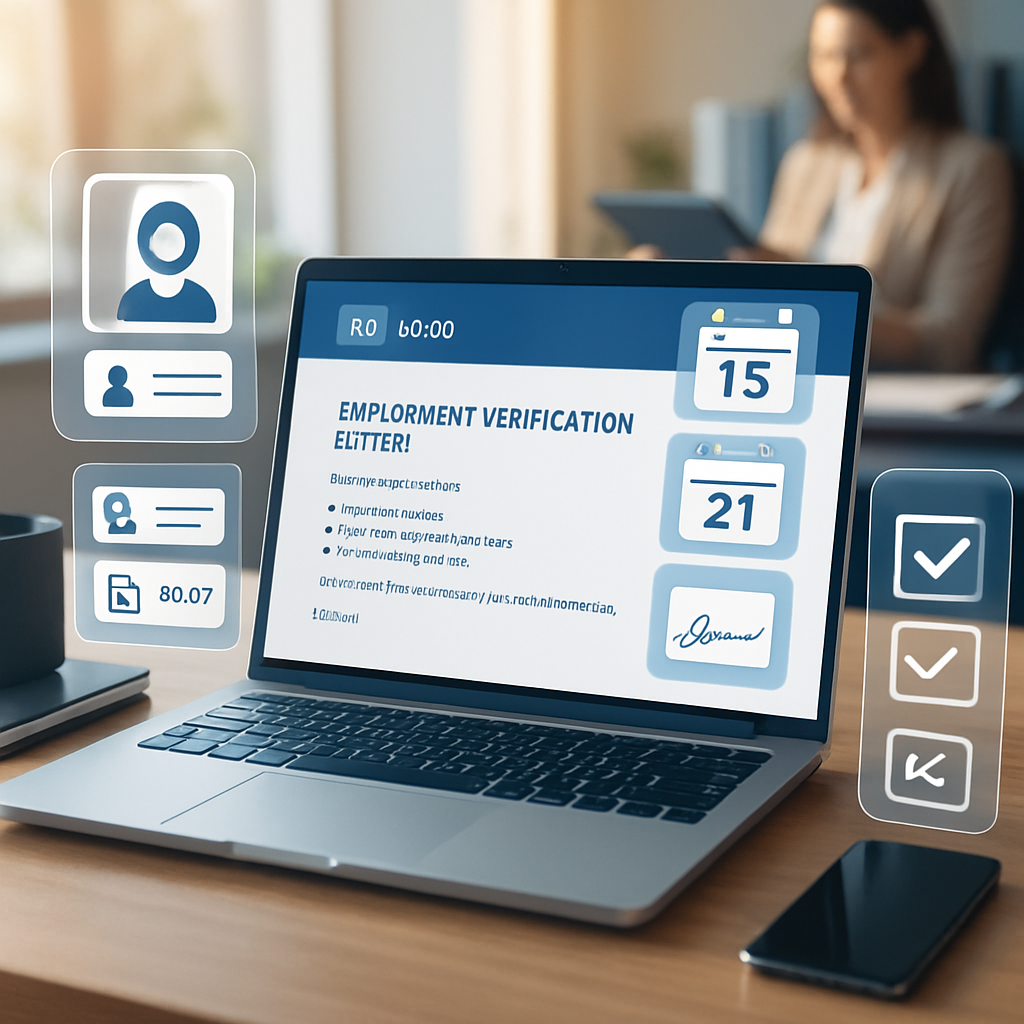
Need to quickly confirm your employment status without waiting for lengthy responses? An employment verification letter template streamlines this process by providing a consistent, professional format that includes all essential job details such as position, dates of employment, and employer contact information. Using editable templates ensures faster turnaround times, clean exports, and easy customization tailored to specific needs like rental applications or loan requests.
In this guide, you’ll learn how to write an employment verification letter that meets formal standards, explore employment verification letter samples, and discover tips to adapt each template for your unique situation. Let’s explore how structured templates can save time while maintaining a polished and authoritative style for employment status confirmation.
Employment verification letter templates streamline the process of confirming employment status for various needs, from rental applications to loan approvals. This guide clarifies their purpose, essential content, and provides ready-to-use editable samples to address urgent verification requests effectively.
- Clarify the letter’s purpose clearly: Understand why and when an employment verification letter is necessary to provide accurate and relevant details.
- Include key employment details: Incorporate job title, dates of employment, salary, and employer contact information in a consistent format.
- Use a step-by-step writing approach: Follow a structured guide to draft or request letters that meet professional and legal expectations.
- Leverage editable templates for speed: Utilize downloadable employment verification letter templates to avoid delays, especially when employers may be slow to respond.
- Adapt templates for specific needs: Customize samples for different purposes such as rental applications, banking, or immigration requirements.
- Maintain professional tone and format: Ensure the letter reflects a formal and authoritative style consistent with business standards.
- Hidden insight—address employer delays: Ready-to-use editable letters provide an immediate solution for individuals needing quick documentation, bypassing typical wait times.
Next, we will explore practical tips for customizing your employment verification letter format and walk through editable samples to fit diverse scenarios. These templates are designed for professional use and to facilitate timely employment confirmation only.
Understanding Employment Verification Letters
Employment verification letters are formal documents used to confirm an individual’s employment status, role, and related details. Utilizing an employment verification letter template ensures uniformity and accuracy in presenting this essential information, which is critical for administrative and legal purposes. These letters help verify claims about jobs, salaries, and tenure, acting as trusted sources for third parties assessing credentials.
Definition and Purpose
An employment verification letter serves to validate that an individual is or was employed at a particular company. It provides a snapshot of key employment data such as job title, duration, and status. This document is often required by landlords, lenders, immigration authorities, and background check agencies to assess reliability or eligibility.
Common Situations Requiring Employment Verification
Employment verification is frequently requested in various scenarios, including:
- Rental and lease applications, where landlords want assurance of stable income.
- Loan or credit approvals to evaluate repayment capability.
- Immigration and visa processes needing proof of employment history and status.
- Background checks during new hires or security clearances.
- Employment transitions, providing official documentation for new roles or benefits.
Understanding these uses helps tailor letters appropriately, ensuring they meet recipients’ information requirements clearly and professionally.
Key Components of an Employment Verification Letter
An effective letter balances comprehensiveness and clarity, containing key employment data neatly arranged to facilitate easy understanding and validation.
Essential Information to Include
- Employee’s full name and job title: Clearly identify the individual and their position within the company.
- Dates of employment: Specify the start date, and if applicable, the end date or current status.
- Current employment status: Indicate whether the employment is full-time, part-time, contract-based, or temporary.
- Salary or wage details: Include this if requested, adhering to privacy guidelines and company policy.
- Employer’s details: Provide the company name, physical address, and contact information such as HR department email or phone.
Including these components systematically reduces follow-up inquiries and accelerates verification outcomes. Clear sectioning or bullet points within the letter can ensure all points stand out distinctly.
Maintaining Consistent Employment Verification Letter Format
Consistency in the letter’s layout reinforces professionalism and credibility. Employing a standardized formatting approach ensures that every letter is immediately recognizable and easy to process, especially when handling large volumes of verification requests.
Consider these formatting tips:
- Use a formal business font like Arial or Times New Roman, sized between 11-12 points for readability.
- Incorporate official letterheads or company logos in the header to authenticate the document.
- Apply uniform margins and spacing, with distinct headings for each section (e.g., Employment Details, Contact Information).
- Align text left for clarity, and make use of paragraph spacing to avoid clutter.
This foundational approach prepares the letter template for easy reuse and assures recipients of its legitimacy.
How to Write an Employment Verification Letter: A Step-by-Step Guide
Writing an employment verification letter systematically can improve accuracy and professionalism, reducing the risk of errors or omissions.
Step 1: Clarify the Purpose of the Letter
Before drafting, pinpoint the letter’s intended use. Letters for rental applications emphasize income reliability and job stability, while those for bank loans highlight salary details and employment duration. Tailoring content based on the recipient’s focus streamlines the verification process and avoids unnecessary data inclusion.
Step 2: Gather Accurate Employment Details
Retrieve all pertinent data directly from official HR records or payroll systems. Validate employment dates, job titles, and contractual arrangements to prevent misinformation. Cross-checking these details prior to writing ensures the letter’s integrity and prevents delays stemming from corrections.
Step 3: Draft the Letter Using Professional Language
- Begin with a formal salutation addressing the recipient or “To Whom It May Concern.”
- Clearly state the purpose of the letter in the opening paragraph.
- Present employment details in organized paragraphs or bullet points, allowing quick scanning.
- Include employer contact details for any necessary verification follow-ups.
- Close politely with an invitation for further inquiries, followed by a professional sign-off such as “Sincerely” and the issuer’s name and position.
Step 4: Review and Approve Before Sending
Perform a thorough proofread to check for spelling, grammar, and factual accuracy. Confirm compliance with company policies and data privacy standards. A second-level review by a supervisor or HR manager helps maintain consistency and authoritativeness.
With the letter carefully prepared, the next step involves utilizing editable templates to enhance productivity and maintain uniform standards across all issued employment verification letters.
Using Editable Employment Verification Letter Templates
Employing editable employment verification letter templates streamlines document creation, reduces manual errors, and maintains a cohesive appearance across all correspondence.
Benefits of Editable Letter Templates
- Speed: Templates save time by establishing a fixed structure where only variable fields, such as employee names and dates, require updates.
- Professionalism: Predefined formatting ensures letters meet corporate style guidelines without extra effort.
- Customization: Adapt templates for different scenarios — such as rental, banking, or immigration use — without starting from scratch each time.
These advantages make editable templates indispensable tools for HR professionals managing frequent verification requests under tight deadlines.
Where to Find Reliable Employment Verification Letter Templates
Access reputable sources offering editable templates designed for professional use. These templates typically come in Word and PDF formats, allowing easy edits while preserving layout integrity.
For documents harmonizing in style with employment letters, explore our editable company templates. Consistent visual branding across corporate documents boosts organizational professionalism and recognition.
As you customize templates for specific applications, it’s important to consider adjustments tailored to your recipients’ expectations and requirements.
Customizing Employment Verification Letters for Specific Uses
Different verification contexts call for emphasizing particular data points or presenting information in a specialized manner, enhancing the letter’s relevance and acceptance.
Rental Applications
When addressing landlords or property management companies, highlight the applicant’s employment stability and income level. Adding a statement affirming steady, ongoing employment reassures landlords about timely rent payments. Optionally, mention length of service to underscore employment continuity.
Banking and Loan Requests
Financial institutions often require detailed income proof and employment duration to assess credit risk. Customize templates to prominently display salary figures (monthly or annual) and confirm employment status (permanent, contract). Clear presentation of these figures expedites loan processing.
Immigration and Visa Requirements
Immigration authorities might ask for specific phrases or data points, including exact job descriptions, employer registration data, or contract terms. Maintain a formal tone and comply with official guidelines where available. Using editable templates facilitates quick adaptation for these stringent requirements.
For related identity document design needs, consider our editable identity document templates that complement employment letters in comprehensive case files.
Maintaining a professional tone helps build trust and reduces misunderstandings across all these scenarios.
Tips for Maintaining a Professional Tone and Format
Delivering a polished, reliable letter requires attention to language and presentation.
Formal Language and Clear Structure
- Use straightforward, formal language free from slang or jargon.
- Include a respectful salutation such as “Dear Sir/Madam” or “To Whom It May Concern.”
- Employ clear paragraph breaks with logical sequencing of information.
- Utilize official letterhead and consider adding a digital signature or stamp to authenticate the document.
These practices foster credibility and facilitate quick comprehension by the letter’s recipients.
Ensuring Consistency Across Documents
Match font choices, sizes, and colors used in other official correspondence to build a cohesive brand identity. Standardizing margins, bullet style, and spacing reduces cognitive friction for readers reviewing multiple documents from the same organization.
Once letters consistently meet these quality markers, delayed responses from employers can be mitigated through readiness provided by prepared templates.
Addressing Employer Delays with Ready-to-Use Letters
Sometimes employers require extended time to provide formal verification, which may hinder prompt completion of applications or legal processes. Having editable employment verification letter templates readily available allows HR or authorized personnel to swiftly generate compliant letters that address urgent needs without losing formality.
Additionally, pairing employment verifications with other supporting documents, such as financial proof, can enhance application robustness. Use our editable bank statement templates to complement employment data for loan or rental applications seamlessly.
Ready-made templates serve as reliable backups, ensuring applicants’ timelines remain intact while maintaining professional standards.
Practical Steps to Customize and Use the Templates
Effective utilization of editable templates involves a simple workflow ensuring accuracy and professionalism.
Step 1: Select an Appropriate Template Based on Your Purpose
Choose a template that best matches the verification context—rental, banking, immigration, or employment transition—to minimize unnecessary editing and align details with recipient expectations.
Step 2: Fill in Accurate Personal and Employment Details
Carefully enter employee names, job titles, dates, salary information, and employer contact data. Use existing HR records for accuracy, and double-check each field before moving on.
Step 3: Review and Edit for Clarity and Professionalism
Proofread the letter, ensuring language is formal and free of errors. Verify formatting consistency, alignment, and the presence of all required sections.
Step 4: Export and Print or Send Digitally as Needed
Export the finalized letter in common formats such as PDF for a secure, uneditable version, or Word for further editing if necessary. Print on company letterhead or send securely via email, depending on delivery requirements.
For assembling multiple documents required in verification processes, consider integrating utility bill templates or other relevant documents to create comprehensive proof packages efficiently.
Conclusion
Employment verification letters play a crucial role in confirming key job-related information across various important scenarios, from rental applications to immigration processes. By understanding their essential components—including accurate employment dates, job titles, and status—and applying a consistent, professional format, organizations can ensure clear communication that meets diverse recipient needs.
The use of editable employment verification letter templates significantly enhances efficiency, providing a structured yet customizable foundation that reduces errors, maintains brand consistency, and accelerates turnaround times. This approach not only streamlines document creation but also empowers professionals to tailor content precisely for different verification contexts, ensuring relevance and clarity.
Moving forward, prioritizing accuracy, professionalism, and adaptability in crafting these letters will foster smoother transactions and stronger trust with third parties. Leveraging editable templates alongside complementary documents such as utility bill templates and editable bank statement templates can further optimize verification workflows. Embracing these tools encourages maintaining consistent quality and operational agility in all employment verification communications.